
The International Atomic Energy Agency’s (IAEA) annual General Conference (GC) meetings have grown successively more contentious in recent years, owing not least to worsening geopolitical tensions and increasingly intransigent positions among some powerful member states. This has made it harder for member states to pass the “technical” resolutions covering the IAEA’s core functions, including safeguards to prevent nuclear weapons proliferation and technical cooperation to advance sustainable development.
Normally, member states aim to adopt technical resolutions and other decisions on a consensus basis, a practice colloquially known as the “Vienna Spirit”. As issues directly – and increasingly indirectly – related to the technical resolutions make consensus more difficult, more member states and experts alike are asking: is the Vienna Spirit dead?
In the IAEA’s 35-member Board of Governors, the Vienna Spirit has existed in a weakened state for roughly two decades. Disputes over Iran’s nuclear programme were an early fault line. Since 2005, the Board has considered Iran’s non-compliance with its safeguards obligations, and related resolutions have consistently come to a vote. Votes on Iran and other divisive issues have since become a recurring feature of Board diplomacy.
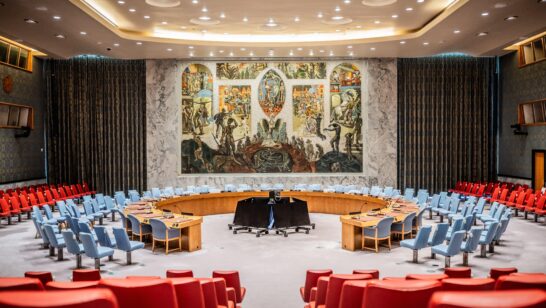
The more immediate question is whether the GC – where the full membership has traditionally been better able to insulate technical business from geopolitical disputes – is now following the same path. With the 2026 GC now underway in Vienna, and member states facing yet another quarrelsome meeting, it is worth asking what damage this trend could do to the IAEA if it continues.
How consensus became harder
It is not unheard of for GC meetings to run late as a function of difficult negotiations, but the issues that keep member states in Vienna’s UN complex are increasingly contentious and increasingly tied to disputes originating outside the Agency.
In principle, the GC runs from Monday morning and closes on Friday. In 2022, following Russia’s full-scale invasion of Ukraine, member states disagreed over how to reflect threats to the Zaporizhzhia Nuclear Power Plant in the nuclear security resolution; the GC adjourned at 1:40 on Saturday morning. In 2023, Iran targeted language related to gender equality in several resolutions, preferring “gender equality or balance” to the longstanding “gender equality” in the nuclear safety resolution. The compromise pushed the meeting to 3:20 on Saturday morning. In 2024, the same dispute returned; the language reverted to “gender equality”, but the meeting again ran past 3:00 in the morning.
These disagreements can look parochial, but they illustrate a broader problem: regional and ideological conflicts increasingly spill into forums whose effectiveness depends on states compartmentalising. The same pattern was visible at the 2026 Nuclear Non-Proliferation Treaty Review Conference, where an impasse between Iran and the United States over language addressing the former prevented a consensus outcome.
The 2025 GC went longer still, due to the insistence of the US on removing references to gender, diversity, climate, and development across a number of resolutions. Other member states were divided over whether, and how loudly, to object. By 6:15 on Saturday morning, the resolutions on safeguards, technical cooperation, and parts of the nuclear applications resolution remained open. There were no substantive disagreements outstanding in the safeguards resolution, but the three had become a “package”: if one was voted on, a vote would be forced on all three. To avoid that outcome, the GC decided to “roll over” the 2024 texts and request the Director General to report on them in 2026.
The procedural fallout consumed still more time, with member states disputing whether they had been given a proper opportunity to speak and whether the safeguards resolution could still be considered. After roughly 24 hours of negotiations, the GC finally adjourned at 9:10 on Saturday morning. The significance was not the procedural drama itself, but what it underscored: consensus had become so fragile that even resolutions without outstanding substantive disagreements could be caught in a wider political deadlock.
There have, of course, been tense GC meetings in the past. But geopolitical tensions outside the Agency are increasingly corroding the insulation around the IAEA’s technical work that once allowed member states to treat it as a shared interest worthy of compromise.
Whether one views the issues challenging consensus outcomes as “directly relevant” to the IAEA’s technical work is almost beside the point. The problem is that influential countries are less willing to leave any forum uncontested, while the shared interest that consensus requires can itself become leverage for states prepared to hold resolutions hostage. This tactic has become more commonplace.
What a broken GC means
It could be tempting to write this trend off as inside-Vienna theatre: diplomats debating over commas in the wee hours of the morning. Over time, though, difficulty agreeing on technical resolutions (as opposed to the “political” resolutions, which are often voted upon) will blunt the Agency’s ability to react to crises in a rapidly changing world.
The technical resolutions are often formulaic and give the IAEA Secretariat instructions for the coming year. During more contentious GCs, many member states push for “technical updates only”, which means the substance doesn’t change, just the dates and numbers. This was perennially the least common denominator for deliberations until the 2025 “roll-over”, which produced no new resolutions where consensus could not be found. Member states are actively considering another roll-over this year.
To be clear, failure to agree a safeguards resolution does not mean safeguards go unimplemented. It means the majority of member states – who do not sit on the smaller 35-nation Board of Governors – do not have an active and current say in how the instructions to the Secretariat are formulated. In the immediate term this changes little. But as rolling over resolutions (or not tabling them at all – an idea already floated in a failing negotiation scenario) becomes more acceptable, the Vienna Spirit of compromise and consensus will further erode.
If this continues, fewer member states will have their hands in crafting the IAEA’s agenda. The resolutions are power steering. Without current instructions to the Secretariat agreed by the whole of the Agency’s membership, directing the IAEA’s activities becomes harder, including on new challenges such as the impact of emerging and disruptive technologies like artificial intelligence.
There are worst-case scenarios in which GC dysfunction bleeds into the Agency’s basic ability to function. For example, imagine the GC unable to pass the Programme and Budget resolution for a coming cycle because it was being “held hostage” for revised language elsewhere. Does no budget resolution mean no budget? This is a question that member states should avoid ever having to ask.
It could be tempting to write this trend off as inside-Vienna theatre: diplomats debating over commas in the wee hours of the morning. Over time, though, difficulty agreeing on technical resolutions (as opposed to the 'political' resolutions, which are often voted upon) will blunt the Agency’s ability to react to crises in a rapidly changing world. Noah Mayhew
Restoring the Vienna Spirit, or learning to live without it
None of this happens by default. Keeping political disputes out of the technical resolutions has never been a given. It depends on member states choosing, year after year, to treat them as separate from whatever else divides them. For this and future GC meetings, that means resisting the temptation to turn every disagreement into a test of principle and avoiding package deals that allow one dispute to immobilise unrelated resolutions.
Can the Vienna Spirit be restored? Probably not in the form long-time GC-watchers remember, when consensus on technical business was often taken for granted. The experience of the Board of Governors suggests that once geopolitical disputes become embedded, consensus cannot simply be wished back into existence. The more realistic task may be to preserve consensus where it adds value while learning to operate when it cannot be reached.
Other multilateral organisations offer a useful comparison. The Organisation for the Prohibition of Chemical Weapons (OPCW) still seeks consensus, but its rules also provide clear routes to majority voting when consensus is unattainable. The OPCW has endured deep political divisions without making unanimity a prerequisite for every substantive decision. The IAEA need not copy that model wholesale, but member states should consider whether treating a vote as exceptional but normal is healthier than allowing the threat of a vote to paralyse its business.
Consensus remains worth fighting for because it gives the Agency’s technical work broad political backing. But consensus is a means, not the mission itself. The goal is to maximise the positive impact of nuclear science and technology for development and the betterment of humankind while minimising the risk of nuclear proliferation. Whether the technical resolutions stay technical is decided again at every GC, by whoever is willing to spend the political capital to keep them that way – and, when that fails, to ensure the institution can still act.
For Europeans and other states invested in effective multilateralism, this requires judgment rather than reflexive defence of consensus at any cost. When the EU is caught between Washington and Tehran on safeguards, for example, it should look for middle ground where that can protect the Agency’s technical mandate, but not at the price of blurring safeguards obligations or weakening the Secretariat’s authority. When Europeans are broadly united against efforts to reopen settled language on issues such as gender, they should coordinate early, build coalitions beyond the EU, and be prepared to defend substantive positions even if consensus proves impossible. The EU and the Group of 77 (G77) show the value of negotiating as blocs. Internal coordination is painstaking, but it creates leverage and can keep wider negotiations from fragmenting.
So, is the Vienna Spirit dead? In the Board of Governors, its old form has been gone for years. At the GC, it may not be dead, but it is certainly on life support. Rather than a constant on which member states can rely, it is an aspiration that must be nurtured – without allowing the pursuit of unanimity to become a veto on the Agency’s ability to function.
The last few GCs should serve as a warning: If a conference designed to give all member states a voice can no longer effectively steer the Agency, restoring its authority will be difficult, and the IAEA’s mission will ultimately bear the cost.
The European Leadership Network itself as an institution holds no formal policy positions. The opinions articulated above represent the views of the authors rather than the European Leadership Network or its members. The ELN aims to encourage debates that will help develop Europe’s capacity to address the pressing foreign, defence, and security policy challenges of our time, to further its charitable purposes.
Image credit: Dean Calma / IAEA / Flickr