
The extraordinary parliamentary elections held on 25 October marked the end of Aleksandar Vučić’s 14-year rule and that of the Serbian Progressive Party (SNS). The result represents the culmination of years of opposition activity, civic resistance and, ultimately, a mass student movement that fundamentally changed Serbia’s political landscape. While the electoral defeat of the ruling party opens a historic opportunity for democratic renewal, the challenges facing the incoming leadership are considerable. Restoring democratic institutions, redefining Serbia’s foreign policy, and addressing its energy vulnerabilities will be among the defining tests of the country’s next political chapter.
During his tenure as prime minister and later as president, Vučić concentrated political authority in his own hands, extending the SNS’s influence over the media, judiciary, and state institutions. This system began to unravel in November 2024, when the collapse of a concrete canopy at the railway station in Novi Sad killed 16 people. The tragedy, widely associated with corruption and inadequate oversight of public infrastructure projects, triggered a wave of student-led protests that soon developed into a nationwide movement demanding major reform. Over the following two years, students organised demonstrations and mobilised communities across Serbia, transforming widespread public anger into a broader challenge to the country’s political system.
This movement did not emerge in a political vacuum. For years, opposition parties had challenged the government under exceptionally difficult conditions, characterised by extensive media control, systemic corruption, misuse of public resources, links between political power and organised crime, and the subordination of the judiciary, prosecution service, security services, police and other state institutions to the ruling party. Despite these constraints, opposition forces managed to consolidate significant electoral support. At the 2023 parliamentary elections, a united opposition list secured almost a quarter of the vote, an unprecedented result for the opposition during Vučić’s years in power.
Yet something was still missing – the broader mobilisation of young people. The student movement provided this, bringing new energy and organisational vigour that established opposition parties had struggled to generate. Its ability to mobilise beyond Serbia’s major cities, including in rural communities traditionally regarded as SNS strongholds, was especially crucial.
Facing mounting political pressure, Vučić resigned the presidency on 27 September and called extraordinary parliamentary elections. The students responded by assembling the Student List – Students Win, a slate of candidates drawn from academia, civil society and other sectors, including prominent figures such as former professional basketball player, coach, and EuroLeague President Dejan Bodiroga. Rather than operating as a conventional political party, the movement presented itself as a broad platform for democratic renewal, campaigning on promises to tackle corruption and hold officials accountable.
The election was largely a contest between two political forces: the student-backed list and the SNS-led Aleksandar Vučić – United Serbia coalition. Established opposition parties also contested the vote, including the European Serbia coalition formed by the Party of Freedom and Justice (SSP), Serbia Centre (SRCE) and the Solidarity movement, but they failed to secure parliamentary representation. The students’ success reflected not only widespread opposition to Vučić but also the movement’s ability to consolidate voters around a single electoral alternative.
The scale of the electoral rout was particularly significant. Preliminary results published by Serbia’s Republic Electoral Commission gave the Student List approximately 53 percent of the vote and 140 of the 250 parliamentary seats, compared with just over 39 percent and 104 seats for the SNS-led coalition. The remaining seats went to representatives of national minorities.
This is the most unprecedented parliamentary reconfiguration since the restoration of multiparty politics in Serbia more than 35 years ago. It gives the incoming parliamentary majority an exceptional opportunity to initiate far-reaching political and institutional reforms. At the same time, the Student List’s emergence outside the traditional party system presents its own challenges. Its diverse membership and relatively decentralised leadership helped sustain a broad protest movement, but governing will require a more clearly defined political programme and institutional coordination.
The end of an authoritarian political system, however, does not automatically mean the restoration of democracy. Serbia faces the difficult task of rebuilding institutions that have been systematically weakened, restoring the independence of the judiciary and prosecution service, strengthening democratic accountability, and reversing the concentration of economic and political power in the hands of a small and politically connected elite. The scale of institutional damage means that this process will require both political determination and considerable time.
For Serbia’s European future, the foreign policy orientation of the incoming government will be particularly important. The SSP, a centre-left party and associate member of the Party of European Socialists, has long advocated closer integration with the EU, including accelerating accession negotiations and securing full membership by 2030. However, the SSP’s European Serbia coalition failed to secure parliamentary representation in October. The victorious student-backed movement, by contrast, has focused primarily on domestic democratic reform and has yet to articulate a comprehensive foreign policy programme. Whether the new leadership will pursue a decisive strategic reorientation towards Brussels therefore remains an open question.
While the electoral defeat of the ruling party opens a historic opportunity for democratic renewal, the challenges facing the incoming leadership are considerable. Restoring democratic institutions, redefining Serbia’s foreign policy, and addressing its energy vulnerabilities will be among the defining tests of the country’s next political chapter. Konstantin Samofalov
During his years in power, Vučić maintained a declared commitment to EU membership while simultaneously pursuing increasingly close relations with Moscow and Beijing. This balancing strategy enabled the government to preserve political room for manoeuvre, but it also contributed to the stagnation of accession negotiations and weakened Serbia’s credibility as a future EU member. The gap between Vučić’s stated commitment to European integration and his government’s actual policies became a defining feature of his foreign policy.
The new leadership will therefore face a strategic choice: whether to continue this policy of balancing between competing centres of power, or to make European integration the central organising principle of Serbia’s domestic and foreign policy. For Serbia, this is not simply a question of diplomatic orientation. It concerns the country’s long-term economic development, democratic standards, security and ability to retain its younger generations.
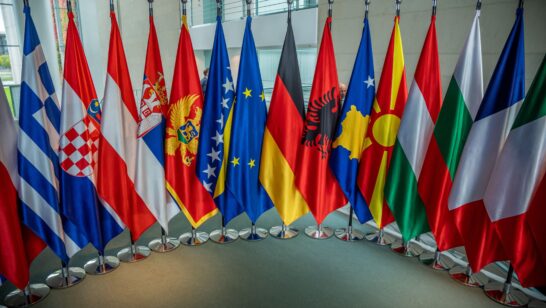
Serbia also has a broader regional responsibility. Montenegro and Albania have moved ahead in their respective accession processes, while North Macedonia, Bosnia and Herzegovina, and Kosovo continue to face significant obstacles to closer European integration. A Serbia genuinely committed to EU membership could become an important driver of regional cooperation and stability. Belgrade remains one of the most influential political and economic centres in the Western Balkans, and a change in its approach could help create new momentum for the region.
European integration is also closely linked to Serbia’s demographic future. Like many Central and Eastern European countries, Serbia faces substantial emigration, particularly among its younger and highly educated populations. Without credible prospects for greater economic opportunity, reversing this trend will be extremely difficult. Membership in the EU is not a solution to every domestic problem, but the European framework offers essential incentives and instruments for addressing many of them.
Energy security will be another immediate test for the incoming government. The future of Naftna Industrija Srbije (NIS), the Serbian oil company majority-owned by Russia’s Gazprom, will require a carefully considered strategic decision. The Party of Freedom and Justice has previously advocated a model similar to arrangements pursued in Romania and Bulgaria, involving the freezing of Russian ownership and temporary state control until international circumstances allow a sustainable long-term solution, ideally following a resolution of the war in Ukraine. Although the SSP will not be part of the new parliamentary majority, the underlying question of how to address Russian ownership remains unresolved.
The previous government rejected this approach, leaving Serbia caught in prolonged negotiations involving the state, Gazprom, and various potential international buyers. The next government must find a solution that safeguards national energy security while respecting the country’s international obligations. Equally important will be diversifying oil and gas supply routes and reducing excessive dependence on a single external partner. Energy diversification should become an integral part of Serbia’s broader European and security strategy.
Finally, the parliamentary elections will not conclude Serbia’s political transition. A series of local and provincial elections will follow, including elections in Belgrade, the country’s principal economic centre, where the SNS remains in power and could retain control until early 2028. Elections in the Autonomous Province of Vojvodina and other cities and municipalities will also shape the country’s new political landscape.
Serbia has reached a historic turning point. Vučić’s defeat has created an opportunity that opposition parties, citizens, and students have pursued for years. But the real measure will be whether the new majority can restore public trust and decisively anchor Serbia within the European political and economic space. The consequences of that choice will extend well beyond Serbia’s borders, potentially reshaping the prospects for stability and European integration across the Western Balkans.
The European Leadership Network itself as an institution holds no formal policy positions. The opinions articulated above represent the views of the authors rather than the European Leadership Network or its members. The ELN aims to encourage debates that will help develop Europe’s capacity to address the pressing foreign, defence, and security policy challenges of our time, to further its charitable purposes.
Image credit: Dimitrije Vasiljevic / Alamy